Hjälp oss att främja biologisk mångfald på Open Food Facts!

Kan du avvara några minuter för att svara på vår undersökning om en ny funktion vi utvecklar som en del av det europeiska projektet DIVINFOOD för att främja agrobiodiversitet i den mat vi äter?

DIVINFOOD har finansierats av Europeiska unionens forsknings- och innovationsprogram Horisont 2020 enligt bidragsavtal nr 101000383

Webinars on Science

We are hosting webinars for scientists in French and English

English - French

Science-based, and helping Science

Science is one of the core pillars of Open Food Facts. Open Food Facts, from its creation in 2012, has relied on peer-reviewed scientific work to inform the public, like Nutri-Score and NOVA, and by making them available for a massive amount of people, across the world. We are also very happy and proud to see scientists reuse our data to push scientific knowledge forward. We love to engage with research teams to see what they can come up with, and how we can help them.

If you're using or considering using Open Food Facts as part of a science project, please let us know at contact@openfoodfacts.org


Open Food Facts-teamet möter EREN-forskarteamet

Meeting the EREN research team

We got to meet the EREN research team to better understand their scientific needs and the improvements they need in Open Food Facts.
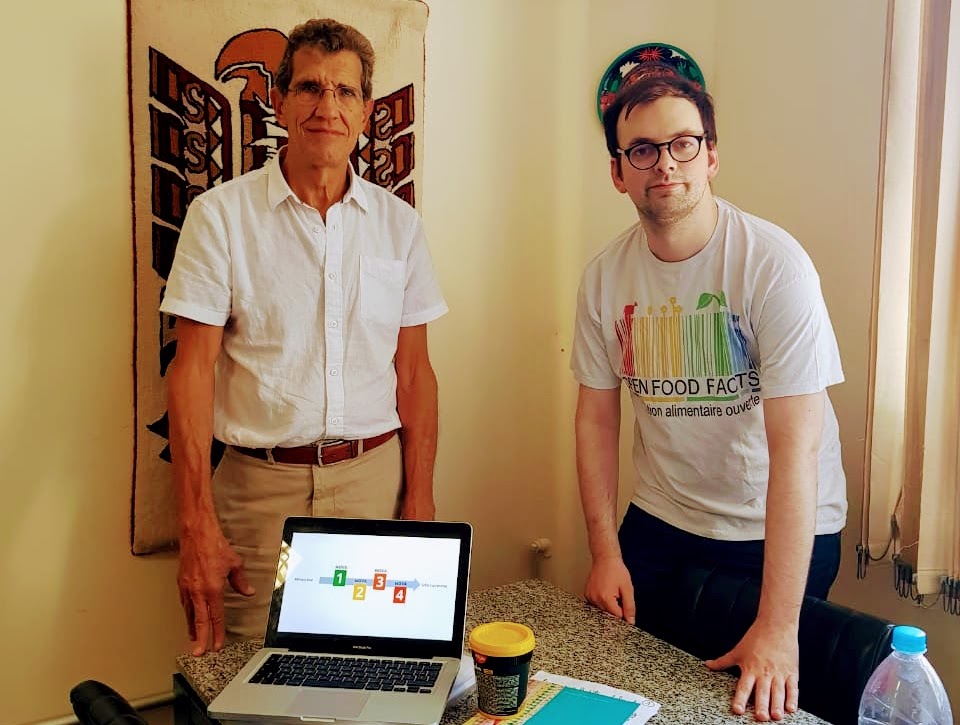
Meeting Pr.Monteiro, the creator of NOVA

Meeting Pr.Monteiro, the creator of NOVA

Vi fick träffa Pr. Monteiro at Faculdade de Saúde Pública da USP, part of the team creating nutritional guidelines for Brazil, and creator of the NOVA groups on food processing.

Scan party in Belgium

Collaboration with the Liege University

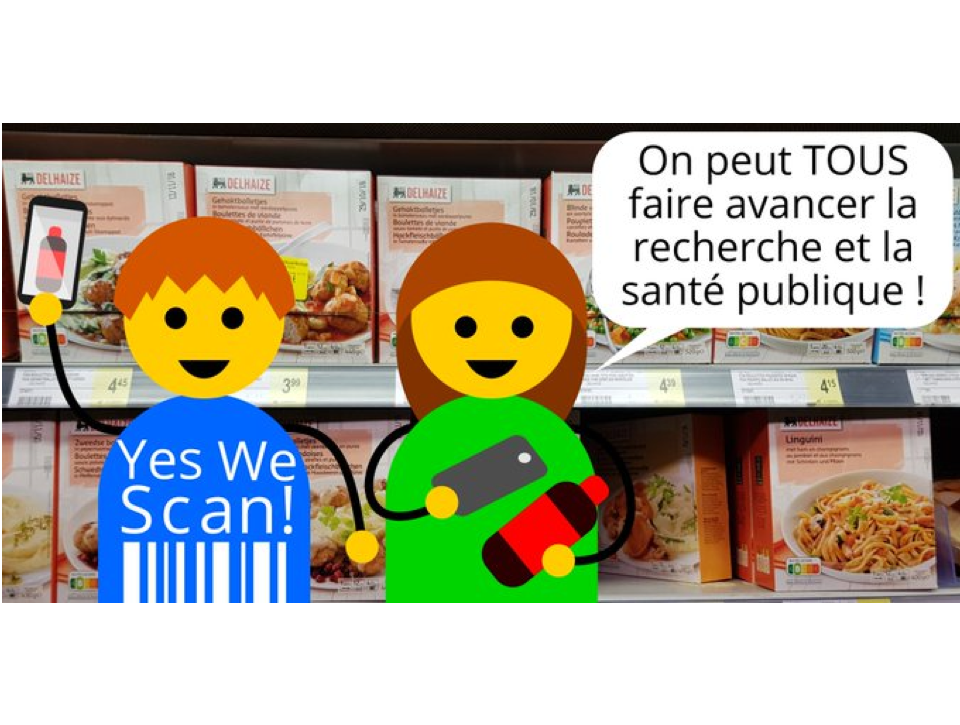
The nutrition team of the Liege University is running a Scan Party in Belgium to constitute a database to support their research, and enable benchmark across countries.
Logotyp för Fundación Franco-Mexicana para la Medicina

Collaboration with the Mexico research team

The team of the Fundación Franco-Mexicana para la Medicina is running a massive Scan Party in Mexico to constitute a database to support their research, and enable benchmark across countries.
Université de Lièges logotyp

Med hjälp av kraftfulla verktyg & Open Food Facts community

Open Food Facts has many tools to allow you creating data at large scale, using crowdsourcing.
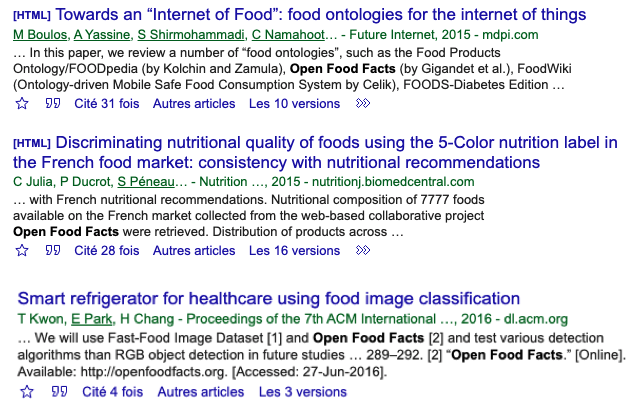
Artiklar som citerar Open Food Facts på Google Scholar

Mätbar vetenskaplig påverkan

Many publications use and cite Open Food Facts, both in nutrition and other research areas. Utforska artiklar som citerar Open Food Facts på Google Scholar

A huge open crowdsourced database of food products, the Wikipedia of food

Since 2012, thousands of people from our international community have been contributing with product data, as well as updating it & improving its quality. Since 2019, we've also started using AI (machine learning) trained to recognise images, logos, and extract text from images to improve the database further.

-Baserat på vetenskap och i vetenskapens tjänst sedan 2012-

Open Food Facts has become a very useful resource for researchers worldwide who use our food data for some major studies on nutrition or the environment. State research teams have also benefited from this digital commons tool.

Förutom att göra rå produktdata fritt tillgänglig för alla forskare över hela världen, strukturerar och analyserar vi data för att göra den mycket mer direkt användbar för deras forskning. Vi arbetar också direkt med forskarteam för att förstå hur vi kan svara på deras behov och för att göra resultaten av deras forskning omedelbart tillgängliga för alla andra forskare.

Transparency accelerates scientific research and cooperation to gain new knowledge

Open Food Facts has been cited as a source in over 600 scientific papers (over 500 on Google Scholar). Science being one of our pillars, Open Food Facts also uses peer-reviewed scientific research to inform the public, such as the Nutri-Score and NOVA group, and makes it accessible to a very large number of people worldwide.

"Given the major public health challenges linked to nutrition that we are facing today on a global scale, it is essential to promote the consumption of a diet that is more conducive to good health. In this context, a digital database containing information on the various health aspects of food (nutritional composition, degree of processing, additives, etc.) is an essential tool for public health research and action."
Professor Serge Hercberg - creator of the Nutri-Score